About the Author
Nate Eckler is a USCG Licensed 100 Ton Master with forty years on America’s coastal waters. He has worked as a captain, delivery skipper, marine consultant, yacht broker, and maritime instructor from the Pacific Coast to the Gulf of Mexico and the Atlantic seaboard. Vigilant, the first Walker Shaw novel, is his debut.
The water
Forty years is long enough to stop finding the ocean romantic and start finding it interesting. He has delivered boats he would not have bought, through weather he would not have chosen, on a schedule someone else set. He has valued hulls whose owners very much wanted a particular number written down. He has run the Pacific Coast, the Gulf, and the Atlantic, and learned that it is one job in three different environments—the same decisions, asked by different water.
The only time in forty years I’ve been seasick was coming up the California coast in the Saint Joseph—eighteen feet at eight seconds, hour after hour. Most people hear “eighteen-foot swells” and picture something majestic. Anyone who’s worked it hears the eight seconds. There’s no room for the sea to lie down between crests, and on a slow boat that means burying the nose all night.
That is the difference between reading about the ocean and working it. The number people quote is the wrong number.
Other days the ocean is not the problem at all. Five hours out of the Bay Area peninsula, crossing San Pablo Bay on a delivery up to the Sacramento River, a raw water hose let go on a 40-foot Holiday Mansion and took the exhaust hose with it—no cooling water meant the rubber cooked through to charcoal. What got that boat back to the dock was electrical tape on the intake, a mylar potato chip bag and a flattened soda can over the exhaust, and a bilge pump wired direct to stay ahead of what both repairs were leaking. Five miles at idle.
Nothing in that engine room was the right part. Knowing what each wrong part was good for is the job. That afternoon later became a repair Walker Shaw makes at the Bucktown station.
Ask which of them he would buy back and there is no shortage of candidates, but the answer is a 30-foot Coast Guard Surf Rescue Boat. He had 30606. A chance at another came along years later and did not come together. She would be a completely impractical boat to own. It still comes up anyway.
The training ships
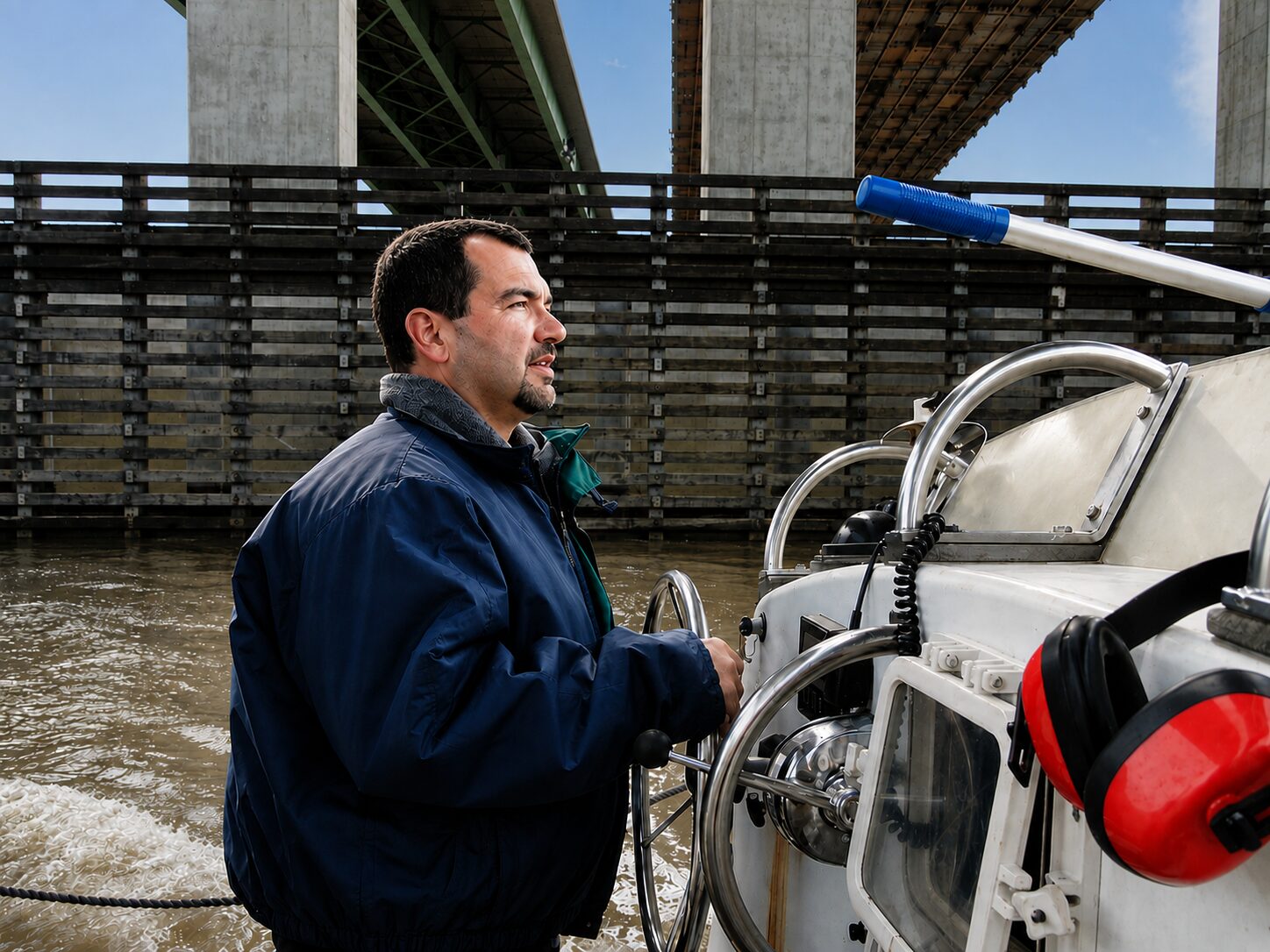
It began at twelve years old, helping rebuild a World War II-era Air Force crash rescue boat—Sea Scout Ship 30, the Neptune. He was standing behind her wheel at thirteen. Years later he came back to her, first as Executive Officer and eventually as her skipper.
He stood watches aboard the Avenger as well, a sister 63-footer. Engine room rounds, logged by hand, in a book that did not care how old you were.
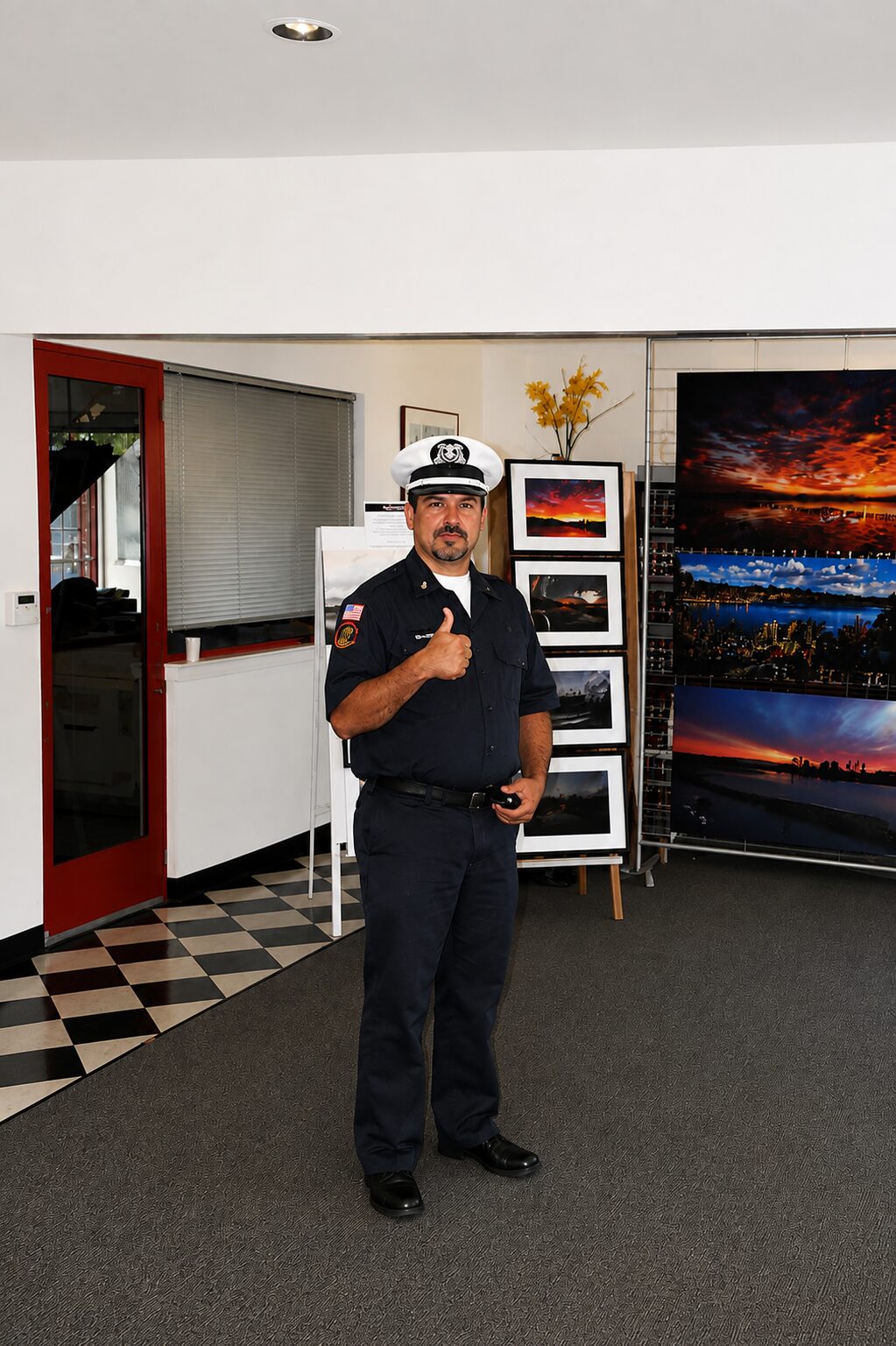
He has written about what those boats taught him in Why I Wrote VIGILANT.
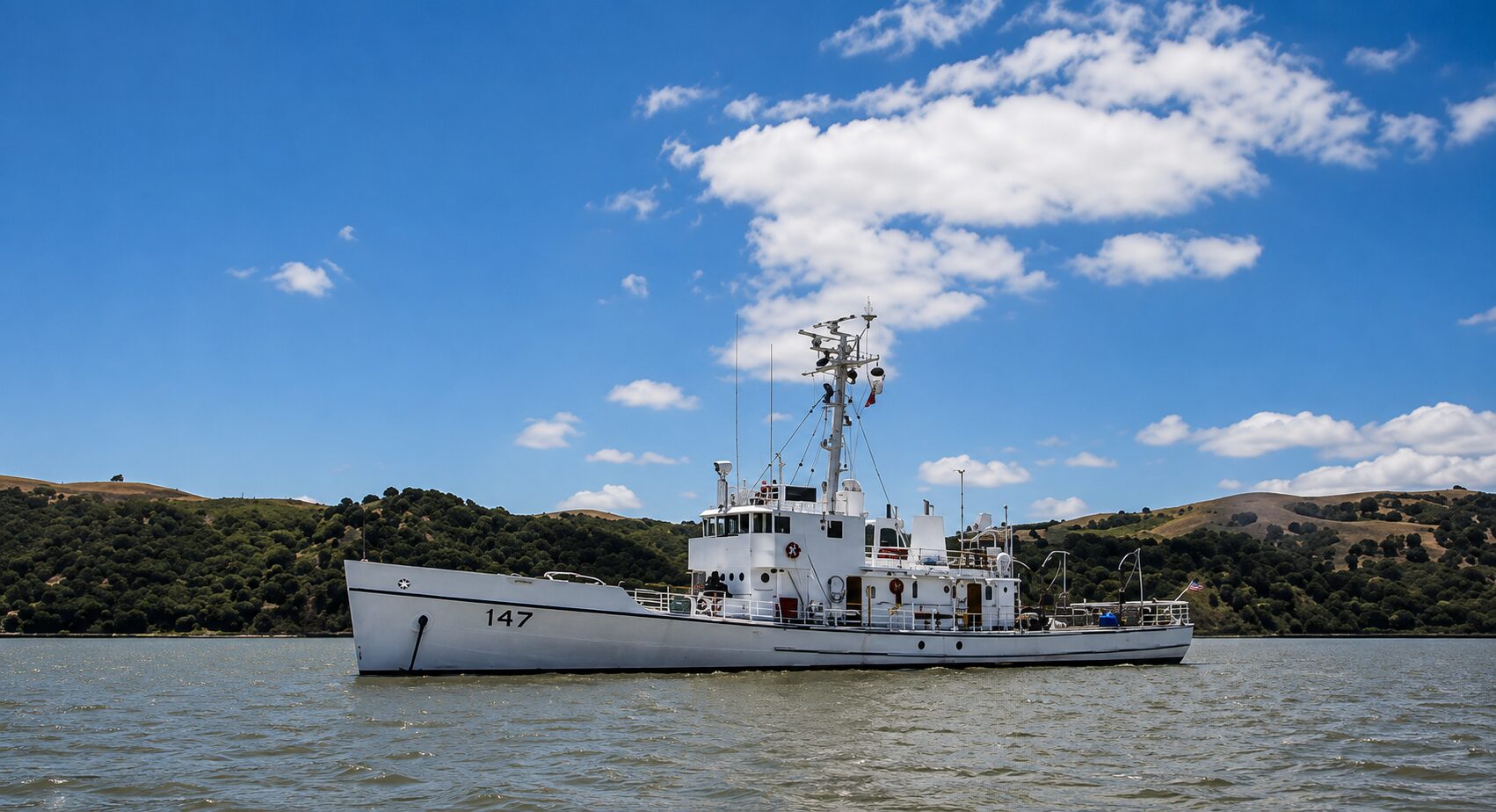
The same youth maritime program later operated the former Coast Guard cutter Morris—125 feet, built in 1927 to chase rum runners during Prohibition, and the last of her Active-class sisters still afloat. She was the largest vessel to come under his command, and the one people remember, but she was never the only one. Between and alongside the big hulls ran a working fleet of pleasure craft, commercial vessels, and military boats, all of them kept alive as classrooms. He even converted a floating barge into an 1,800-square-foot classroom and workshop.
Command of a training ship is not command in miniature. You answer for the vessel, and you answer for a deck full of teenagers who have never stood a watch in their lives, and the sea is indifferent to how hard anyone is trying.
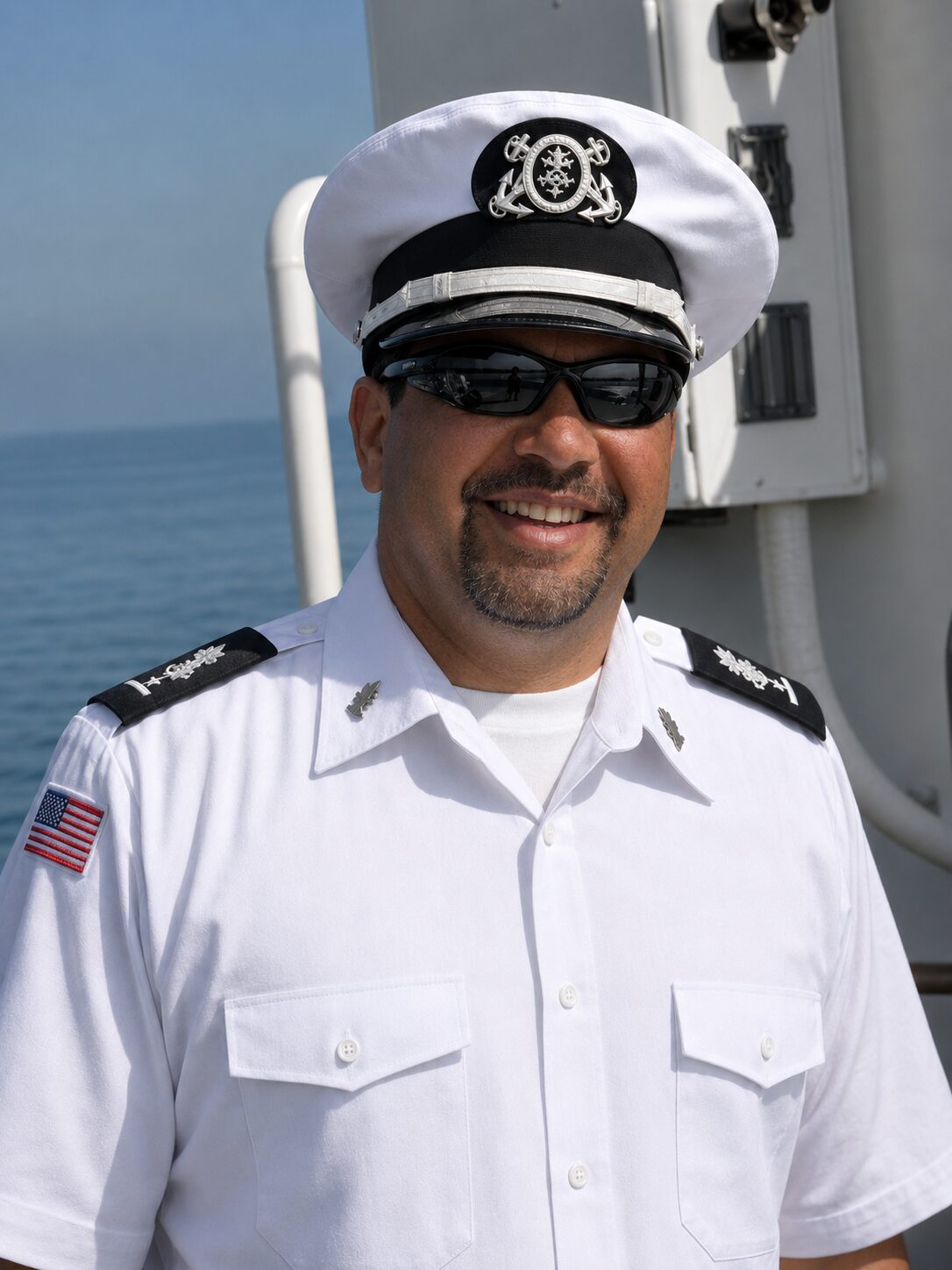
Many of those cadets went on to become Coast Guard officers, merchant mariners, military leaders, airline pilots, business leaders, and professional captains. Watching that happen taught him much of what he knows about how crews hold together—and how they come apart. Those lessons found their way into the crews of the Walker Shaw novels.
The writing
The real version of the maritime trade is quieter, stranger, and more consequential than the version that usually reaches the page. Fiction often gets the boat wrong, then gets the paperwork wrong—and the paperwork is where the real stakes live. In these books the procedures are accurate and the weather is accurate. What happens in between is invented.
Contact
For rights, media, and events, see the contact page.